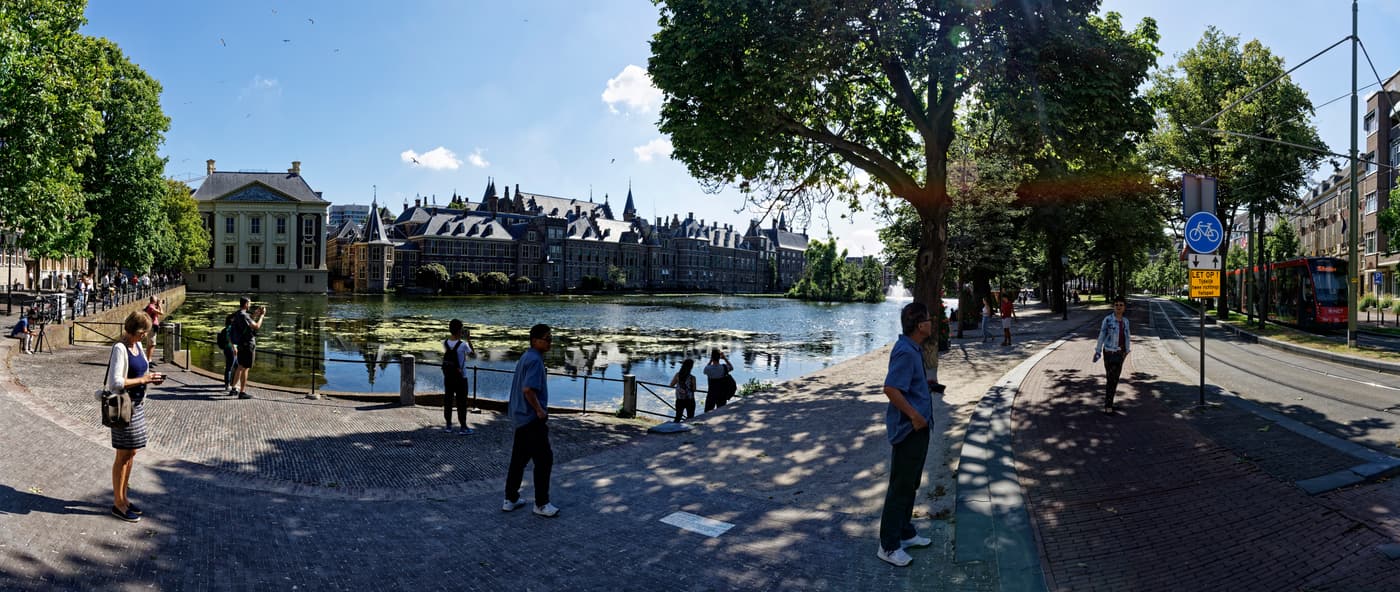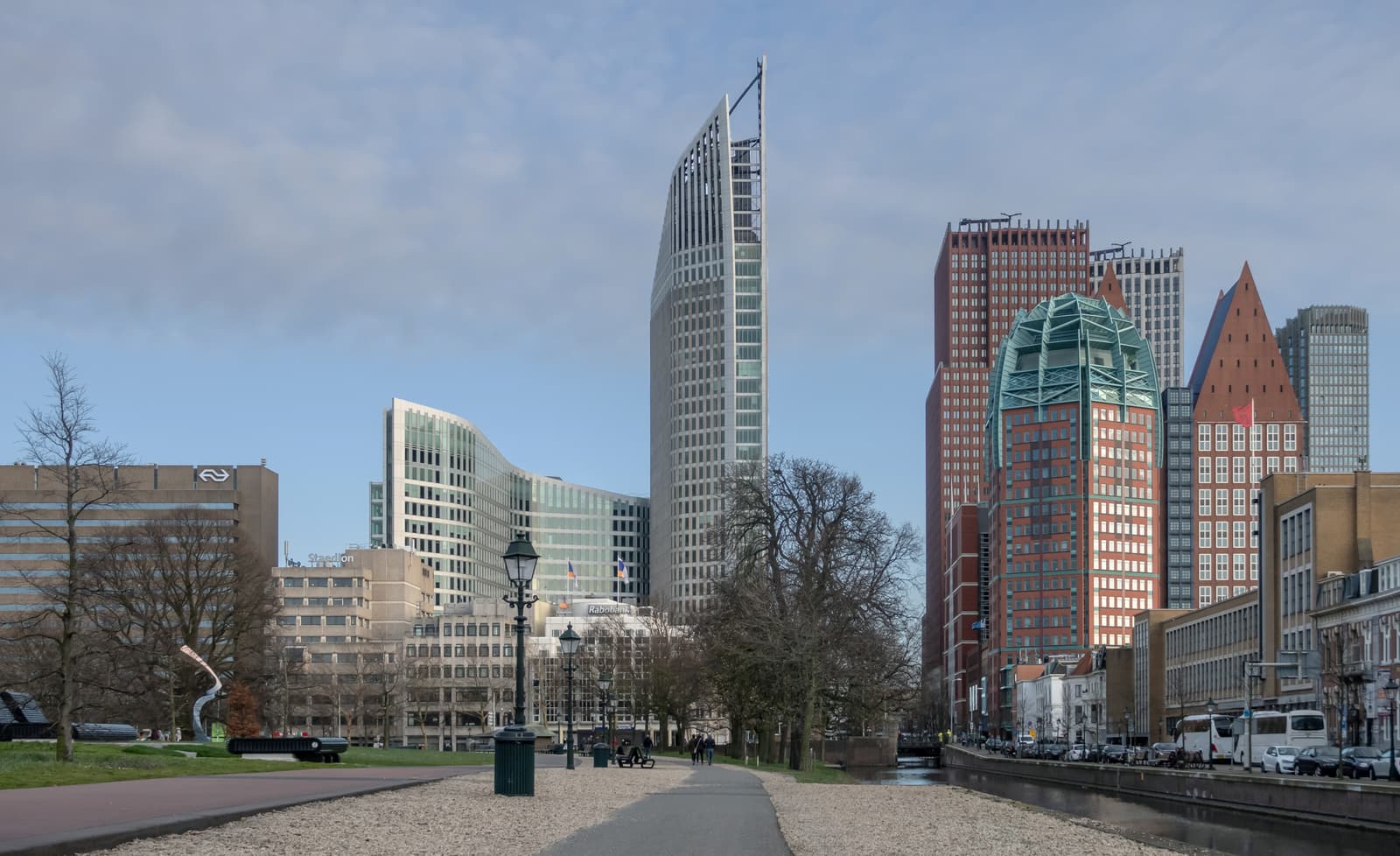
The Hague is the third-largest city in the Netherlands, home to more than half a million people, and one of its most surprising. Behind the image of politicians and international courts is a green, elegant city of tree-lined avenues, palaces and very good museums — with eleven kilometres or so of North Sea beach and dunes on its western edge.
It is not a capital, and it does not feel like Amsterdam: there are fewer canals, wider streets, more embassies and far fewer crowds. Many visitors come for a single day from Amsterdam and leave wishing they had stayed longer.
A short history
The Hague began in the 13th century as a hunting lodge of the Counts of Holland beside a pond — today’s Hofvijver. The counts built the Ridderzaal, the Hall of Knights, and the court that grew around it became the Binnenhof. When the Dutch Republic was formed, its government met here, and so did the princes of Orange; the city’s formal name, ’s-Gravenhage, means “the count’s hedge”.
The Golden Age left the Mauritshuis and the patrician houses of Lange Voorhout. In the 19th century the fishing village of Scheveningen became a fashionable seaside resort, and in 1913 the Peace Palace opened, making The Hague a centre of international law. Today the government, parliament, the Supreme Court, dozens of embassies and many international organisations are based here.
The highlights
- The Mauritshuis — Vermeer’s Girl with a Pearl Earring and the best of Dutch painting.
- The Binnenhof and Hofvijver — the medieval parliament complex on its pond (under long-term renovation).
- The Peace Palace — home of the International Court of Justice.
- Escher in Het Paleis and Panorama Mesdag — two unique museums.
- Scheveningen — the beach, the pier and the Kurhaus.
- Madurodam — the Netherlands in miniature.
- Delft — canals, Vermeer and Delftware, a short ride away.
Sample itineraries
These assume you are based in the centre and use trams. Swap days around to put the beach on the sunniest one.
| Trip length | Day by day | Good for |
|---|---|---|
| 1 day | Mauritshuis at opening → Binnenhof and Hofvijver → lunch near the Plaats → Lange Voorhout and Escher in Het Paleis → tram to Scheveningen for sunset | Day trips from Amsterdam or Rotterdam |
| 2 days | Day 1 as above, without the beach. Day 2: Peace Palace visitor centre → Panorama Mesdag → Madurodam → afternoon and dinner at Scheveningen | A weekend break |
| 3 days | Add a day for Delft (Nieuwe Kerk, Oude Kerk, Royal Delft) or the Kunstmuseum plus a bike ride through the dunes to Kijkduin | A relaxed first visit |
| 4–5 days | Add Leiden, Rotterdam, or the Keukenhof in spring, and a canal cruise and a food tour in the city | Families and slow travellers |
 The historic centre
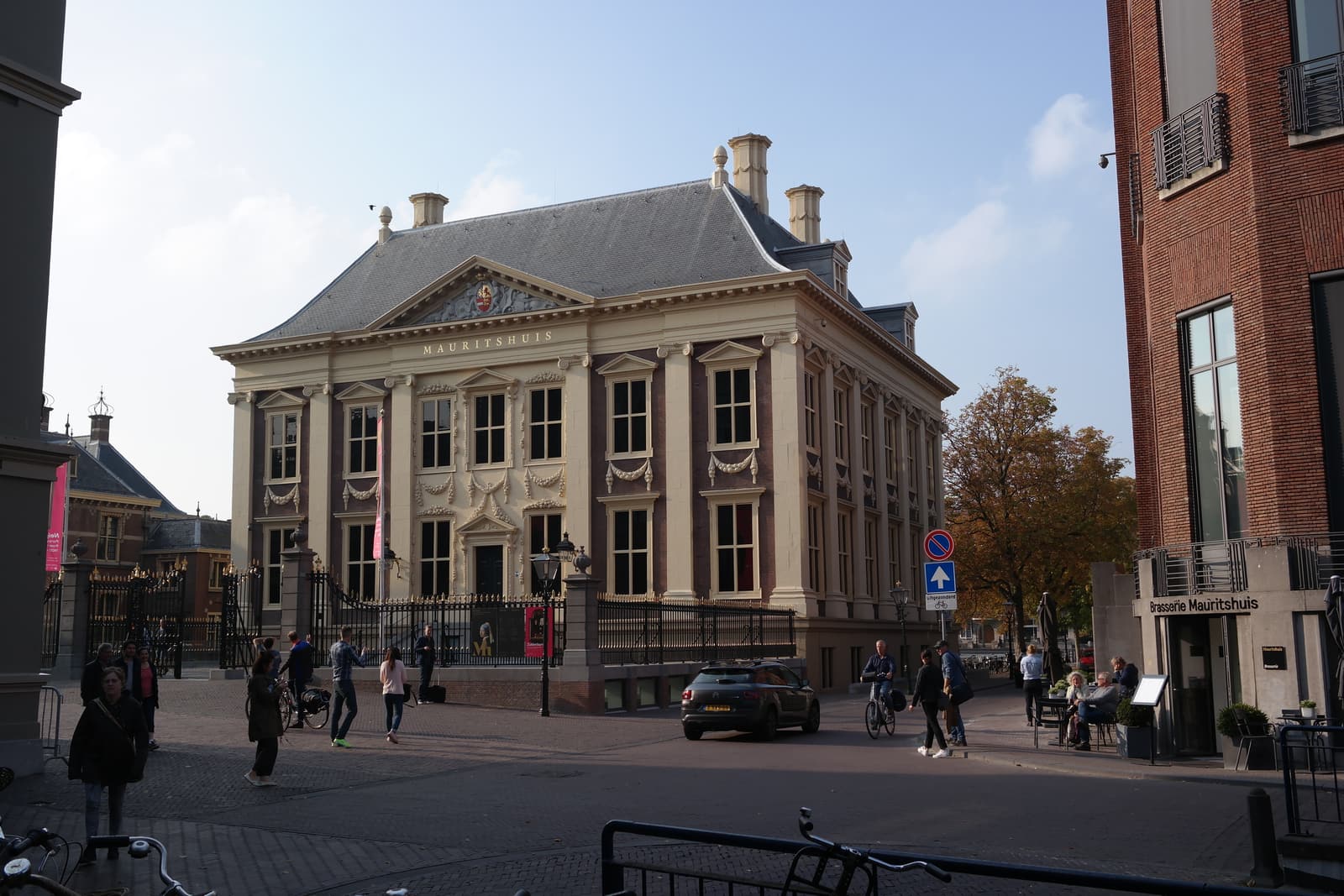
Mauritshuis
A 17th-century palace on the Hofvijver, home to Girl with a Pearl Earring.
One of the world’s finest small museums: a jewel-box of Dutch Golden Age painting in a classical palace built for Johan Maurits of Nassau-Siegen, with Vermeer’s Girl with a Pearl Earring and View of Delft, Rembrandt’s Anatomy Lesson and Fabritius’s The Goldfinch.
 The historic centre
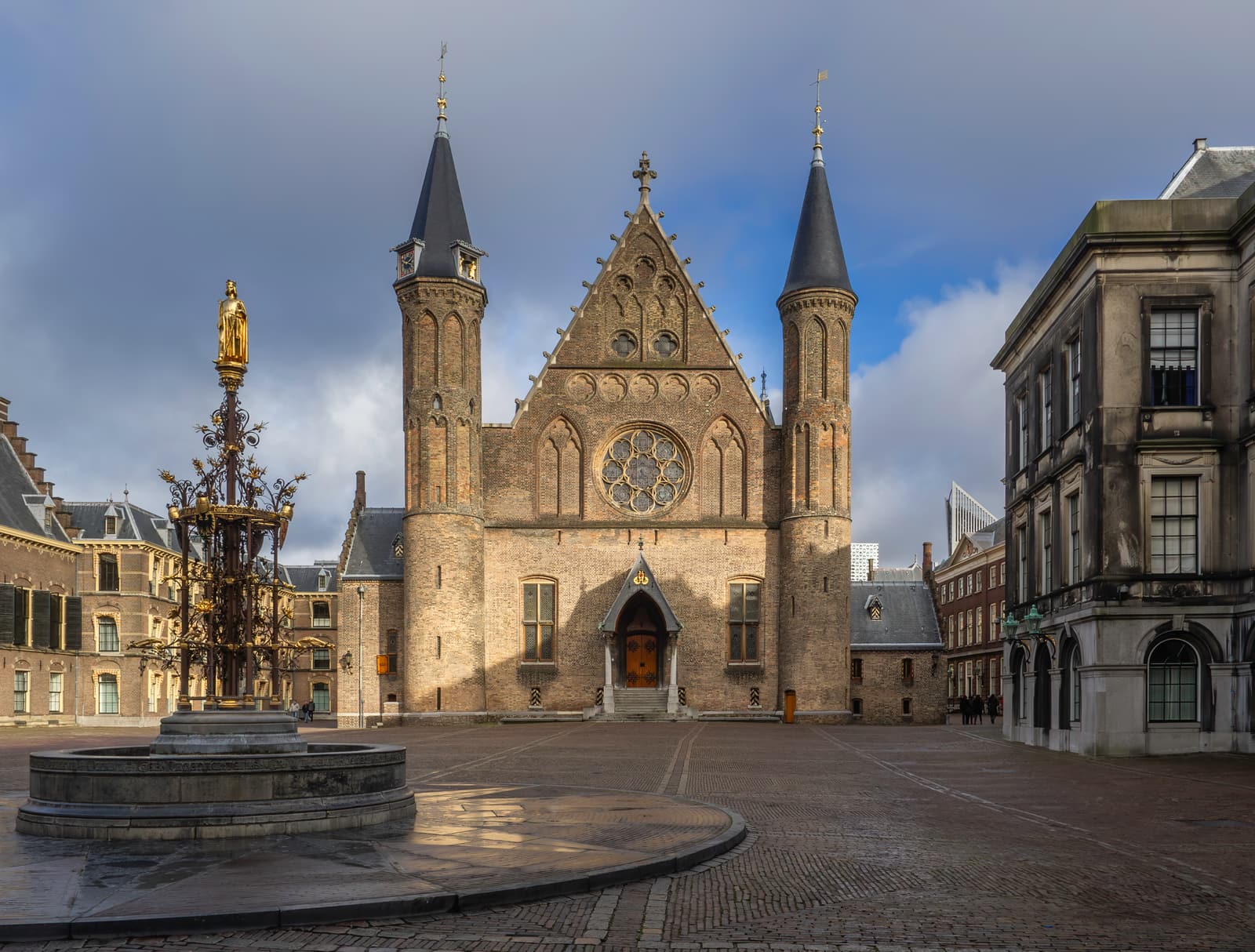
Binnenhof & Hofvijver
The medieval heart of Dutch politics, on its own pond in the city centre.
For centuries the seat of the Counts of Holland and then of the Dutch parliament, the Binnenhof is a cluster of buildings round the Gothic Ridderzaal (Hall of Knights), reflected in the Hofvijver pond. It is in the middle of a long renovation, so access is limited — but the view across the water is as fine as ever.
 The historic centre
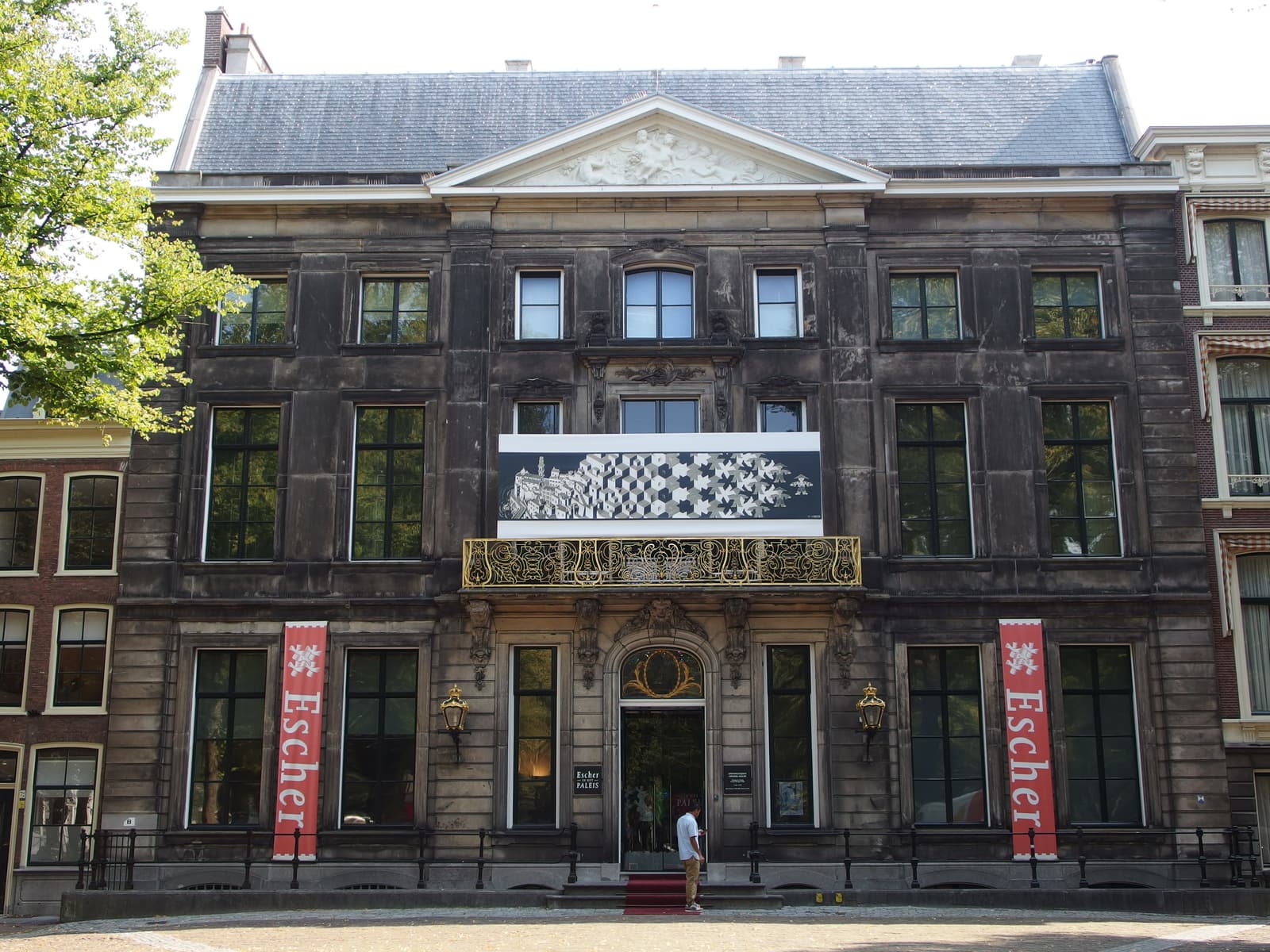
Escher in Het Paleis
M.C. Escher’s impossible worlds, in a former royal winter palace.
The Lange Voorhout Palace, once the winter palace of Queen Emma, now displays the work of the graphic artist M.C. Escher — tessellations, endless staircases and metamorphoses — with original royal rooms, extraordinary chandeliers and a top floor of optical illusions.
 Peace Palace, museums and Madurodam
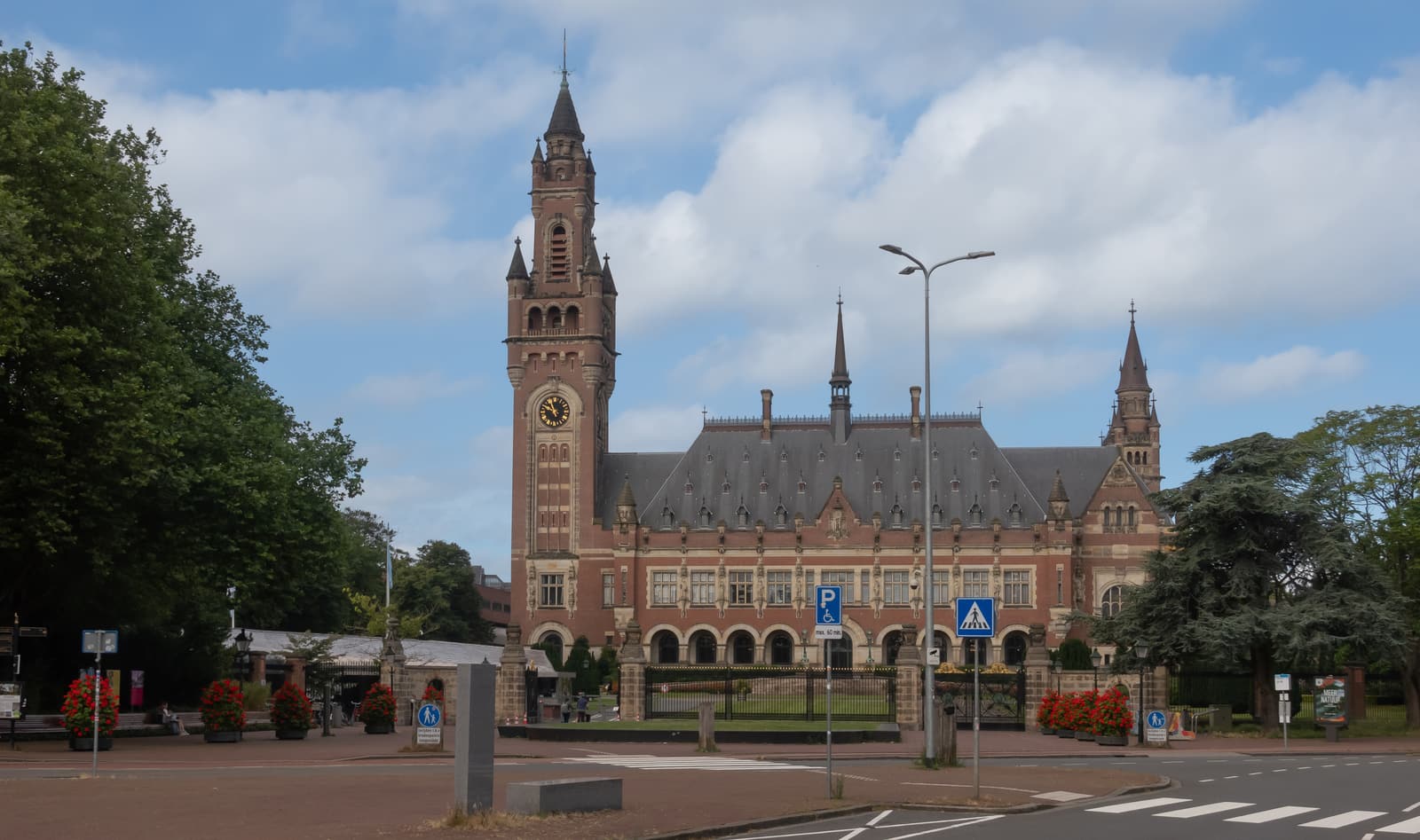
Peace Palace
The home of international law, built with Andrew Carnegie’s money.
Opened in 1913, the Peace Palace houses the International Court of Justice — the principal judicial body of the United Nations — as well as the Permanent Court of Arbitration and a great library of international law. A free visitor centre at the gate explains its work; guided tours inside are rare and must be booked.
Food and drink
The Hague eats well and internationally. Look out for Indonesian food — a legacy of colonial ties and a large Indo-Dutch community — from a quick nasi to a full rijsttafel. At Scheveningen, eat fresh fish at the harbour or try raw herring from a stall, best in early summer. The Denneweg, the Plaats and the streets around the Grote Markt are packed with cafés and restaurants; Chinatown is small but lively. A guided food tour is a good introduction.
Money and costs
- The currency is the euro. Cards are accepted almost everywhere, and some places are card-only; keep a little cash for markets.
- The Hague is a little cheaper than Amsterdam for hotels and food, but still a north-European city — budget accordingly.
- Tipping is not compulsory; rounding up or leaving around 5–10% for good table service is common.
- A city tourist tax is added to hotel bills.
Safety and etiquette
- The Hague is generally safe. Use normal precautions with bags in crowds and at stations, and lock bikes with two locks.
- Bike lanes are not pavements. The red-surfaced paths belong to cyclists — look both ways before stepping onto one.
- On the beach, swim only at guarded sections in season and follow the flags; North Sea currents can be strong.
- Security is visible around parliament and international institutions; follow staff instructions and do not photograph checkpoints.
Weather and what to pack
The climate is maritime: mild summers, cool damp winters, and wind and showers at any time of year. Bring layers, a rain jacket that copes with wind (umbrellas suffer on the seafront), comfortable walking shoes and, in summer, swimwear and sun cream for the beach. See when to visit.
Where to stay
For a first visit, stay in the centre near the Binnenhof and Lange Voorhout. For a summer beach holiday, choose Scheveningen. Near Den Haag Centraal is practical for day trips. Our where to stay page compares the areas and lists hand-picked hotels in every budget.